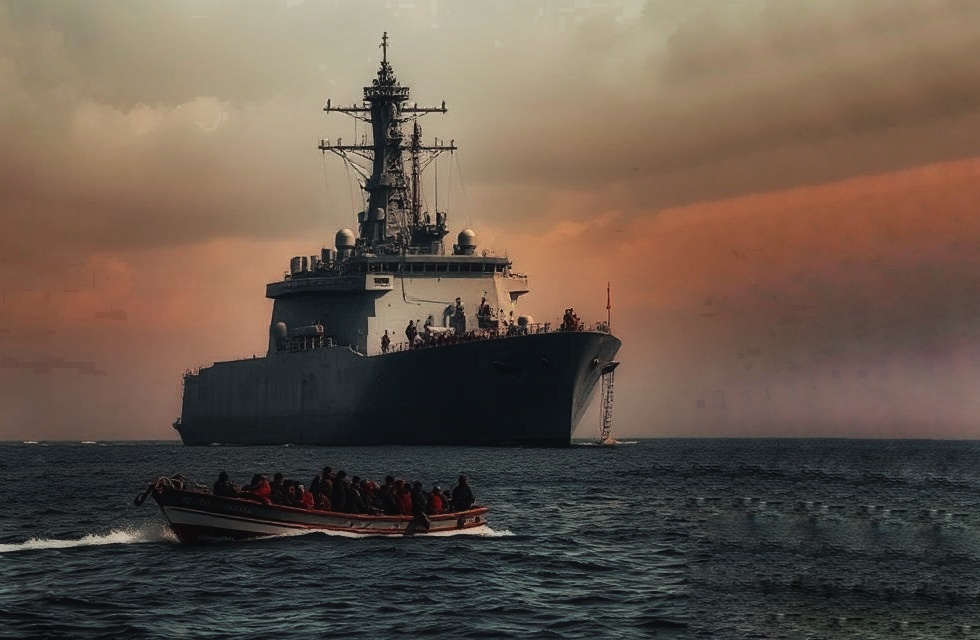
In today’s debates about “illegal immigrants, of Europe” the conversation is often reduced to blame, either directed at the people crossing borders or at the governments that let them in. But the reality is much deeper, rooted in history, geopolitics, and international law. To understand why this happens, we need to look beyond headlines.
1. How Humanitarian Law Began
After World War II, Europe was shattered. Millions of Europeans, Jews, Poles, Hungarians, Germans, were displaced, stateless, or persecuted. Out of that tragedy came the 1951 Refugee Convention, which guaranteed protection for anyone fleeing war or persecution. At the time, it was designed mainly for Europeans. Nobody expected that decades later, the same laws would apply to people from the Middle East, Africa, or Asia.
2. The Cold War and Soft Power
During the Cold War, the West proudly welcomed refugees from the Soviet bloc. It wasn’t just humanitarian, it was political. Every refugee was a symbol: “Look, people are fleeing communism for freedom.” Refugee law became a cornerstone of the West’s moral image.
3. Why the Middle East Is Often Destabilized
When colonial empires collapsed and later Western interventions shook the Middle East, from the overthrow of Iran’s Mossadegh in the 1950s to the wars in Iraq, Afghanistan, Libya, and Syria – the consequences were instability and conflict. But this destabilization is not accidental. The region is kept unstable for several reasons:
- Oil and Energy Security : The Middle East holds the largest reserves of oil and gas. A fragmented region prevents any single power from controlling resources and keeps global markets tied to Western influence.
- Geopolitical Control : The Middle East is a crossroads between Europe, Asia, and Africa. Weak states allow Western military presence, bases, and alliances (e.g., with Israel, Saudi Arabia, Gulf states).
- Preventing Strong Regional Powers : Leaders like Mossadegh, Saddam Hussein, Gaddafi, and Assad, who tried to build independent regional power bases, were undermined or overthrown. A strong, united Middle East could challenge Western dominance.
- Arms Industry Benefits : Conflict drives enormous profits for Western defense industries through weapons sales to allies like Saudi Arabia, UAE, and Israel.
- Strategic Rivalries : Interventions also block the influence of other global players (Russia, China, Iran) from dominating the region.
In short: instability ensures that the region remains dependent, divided, and open to outside influence.
4. Selective Application in Practice
It’s important to note that while refugee law is universal on paper, countries apply it selectively. Ukrainians were received with open arms in Europe, but Syrians and Afghans often faced pushbacks, dangerous journeys, and political hostility. Humanitarian law is a moral obligation, but politics decides how far it really stretches.
5. Why Illegal Migration Is Still Tolerated
If governments really wanted to, they could shut down illegal migration more aggressively and simply bring in legal migrants through work visas. Yet illegal migration continues, often in large numbers. Why?
- Cheap, Flexible Labour : Illegal migrants often work in low-wage, informal sectors (agriculture, construction, domestic work) where employers benefit from their vulnerability. Because they lack legal status, they are less likely to unionize or demand rights.
- Political Theatre : Governments can “appear tough” by blaming migrants for problems while quietly allowing a steady flow that benefits parts of the economy. This double game keeps both sides of the debate engaged.
- Legal Loopholes : Once someone claims asylum, even if they arrived illegally, governments must process their case under international law. This creates a backlog, during which migrants remain in the country, sometimes for years.
- Enforcement Limits : Deporting large numbers of people is expensive, logistically difficult, and diplomatically messy (especially if home countries refuse to take them back). It’s often easier for governments to tolerate their presence.
- Demographic Buffer Without Admission : Illegal migration also quietly supplements the workforce without governments having to officially announce higher immigration quotas, which could be politically unpopular.
In short, illegal migrants serve as a kind of shadow labour force and a political safety valve. Governments condemn them in speeches but often find them useful in practice.
6. When Choices Come Home
Migration isn’t born at the border, it’s born in wars, invasions, and policies made in faraway rooms of power. The people arriving are not the cause of the crisis; they are its consequence.
It is easy to point at boats and call them the problem. But those boats are only the final chapter of a story that started long before, in toppled governments, in broken economies, in conflicts that left entire regions unlivable.
If we only see migration at the shoreline, we miss the truth: the crisis began long before the boats ever left. Migration is not just about “them coming here.” It is about the choices that shaped the world we all now share and the reality that no border wall or patrol can ever stop consequences from finding their way home.
 The Indian Crow
Leave a comment